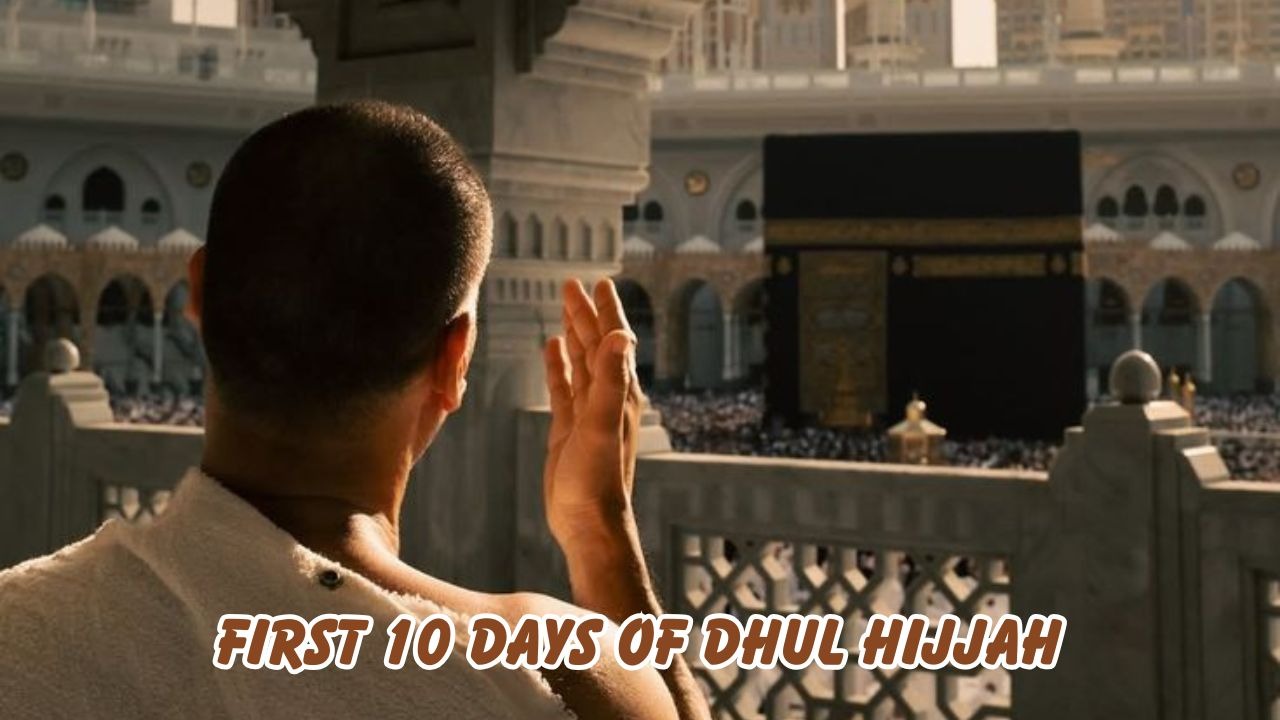
First 10 Days of Dhul Hijjah Your Complete Worship Guide for 2026
First 10 days of Dhul Hijjah stand as the most sacred and spiritually charged days on the entire Islamic calendar a truth confirmed by both the Quran and the Prophet ﷺ himself. During this brief annual window, every good deed you perform from a whispered dhikr to a single day of fasting earns more love from Allah than the same deed carried out at any other point in the year. Whether you are preparing for Hajj or worshipping from home, these ten days hand you a rare chance to reset your faith, stack your rewards, and step into Eid al-Adha with a heart closer to its Creator.
Table of Contents
What Makes the First 10 Days of Dhul Hijjah So Remarkable?
The Prophet Muhammad ﷺ declared in a hadith preserved by Imam al-Bukhari (no. 969) that Allah loves righteous deeds performed during this window more than deeds carried out at any other time. When the companions asked whether even armed struggle in Allah’s cause could surpass these deeds, he answered that only a person who ventures forth with everything he owns and returns with nothing could match it.
That exchange alone reveals the spiritual weight of this ten-day period. For anyone seeking to strengthen their relationship with Allah, pile up good deeds, or prepare for Eid al-Adha, these opening days of the twelfth Islamic month are an unparalleled gift.
This guide draws on authenticated hadith sources, classical Quranic commentary, and the rulings of established scholarly authorities to walk you through every act of worship you can perform whether you are on the plains of Arafat or worshipping from home.
Understanding Dhul Hijjah: The Sacred Month of Pilgrimage
Dhul Hijjah (ذو الحجة) is the twelfth and closing month of the Islamic Hijri calendar. Its Arabic name means “possessor of the pilgrimage,” directly pointing to Hajj the fifth and final pillar of Islam.
What elevates Dhul Hijjah beyond an ordinary month is its classification among the four sacred months (al-ashhur al-hurum). The Prophet ﷺ identified these four Dhul Qa’dah, Dhul Hijjah, Muharram, and Rajab in an authentic report compiled by al-Bukhari (no. 3197). During these months, the gravity of both good and bad deeds is intensified.
Within Dhul Hijjah, the initial ten days are extraordinary because they concentrate every major category of Islamic worship salah, fasting, sadaqah, pilgrimage, and dhikr into a single period. The Yaqeen Institute for Islamic Research, a recognized authority in accessible Islamic scholarship, notes that this convergence of devotional acts is entirely unique to these days and cannot be replicated at any other point in the year
Quranic and Prophetic Proof: Why These Are the Best Days of the Year
Featured Snippet Answer: The first 10 days of Dhul Hijjah are the best days of the year because Allah takes an oath by them in Surah Al-Fajr (89:1–2), and the Prophet ﷺ confirmed in Sahih al-Bukhari that no righteous deeds are more beloved to Allah than those done in this period.
Evidence from the Quran
Allah states in the opening of Surah Al-Fajr: “By the dawn, and by the ten nights” (Quran 89:1–2). The esteemed Quranic commentator Ibn Kathir whose multi-volume Tafsir Ibn Kathir remains one of the most widely referenced exegesis works in Islamic scholarship affirmed that these “ten “Nights” here specifically refers to the first ten days of the month of Dhul Hijjah. The great Hadith scholar Ibn Hajar al-Asqalani also discusses this in his celebrated commentary Fath al-Bari (2/459), reinforcing that this scholarly consensus is well-established.
A second Quranic reference appears in Surah Al-Hajj (22:28), where Allah instructs believers to mention His name during “appointed days.” According to the companion Ibn Abbas (RA) as reported by Imam al-Bukhari these appointed days are the first ten of Dhul Hijjah.
Evidence from the Sunnah
Multiple hadith collections echo this theme with remarkable clarity:
- Sahih al-Bukhari (969) records the Prophet ﷺ saying that good deeds during these ten days surpass those at every other time even surpassing jihad, with one narrow exception.
- Musnad Ahmad preserves a narration directing believers to fill these days with abundant tahleel, takbeer, and tahmeed.
- Sahih Ibn Hibban includes a narration from Jabir (RA) stating that no days are more excellent before Allah than these ten.
When the Quran, the Sunnah, and centuries of scholarly commentary all converge on one conclusion, the evidence becomes impossible to set aside.
Dhul Hijjah 2026 Projected Calendar Dates
Knowing when these blessed days fall allows you to prepare spiritually, arrange your Qurbani, and schedule fasting ahead of time. Based on astronomical data published by the Umm al-Qura Calendar the official calendar used in Saudi Arabia and corroborated by Islamic Relief UK’s 2026 Islamic Calendar, these are the expected dates:
| Hijri Date | Gregorian Estimate | What Happens |
| 1 Dhul Hijjah 1447 | Mon, 18 May 2026 | Blessed 10 days begin; those offering Qurbani stop trimming hair/nails |
| 8 Dhul Hijjah | Mon, 25 May 2026 | Yawm al-Tarwiyah Hajj pilgrims don Ihram and travel to Mina |
| 9 Dhul Hijjah | Tue, 26 May 2026 | Day of Arafah most virtuous day of the entire year |
| 10 Dhul Hijjah | Wed, 27 May 2026 | Eid al-Adha Festival of Sacrifice begins; Qurbani performed |
| 11–13 Dhul Hijjah | 28–30 May 2026 | Days of Tashreeq continued celebration and takbeer |
Eight Powerful Deeds to Perform in the First 10 Days of Dhul Hijjah
The spiritual beauty of these days lies in their accessibility. You do not need to be in Makkah to earn extraordinary rewards. Below are eight worship practices, each rooted in scriptural evidence, that any Muslim can adopt.
1. Fast the First Nine Days Especially Arafah
Featured Snippet Answer: Fasting during the first nine days of Dhul Hijjah is a confirmed Sunnah. The Day of Arafah fast (9th Dhul Hijjah) expiates the sins of the previous year and the coming year, based on Sahih Muslim (1162).
Allah reserves a unique honor for fasting. In a hadith qudsi recorded by al-Bukhari (no. 1904), He declares that fasting belongs exclusively to Him and that He alone will determine its reward a privilege not extended to any other act of worship.
The Prophet ﷺ consistently fasted through the first nine days of this sacred month. His wife Hafsah (RA) confirmed this practice in a narration collected by Imam Ahmad and al-Nasa’i, listing Dhul Hijjah fasting among the habits he never abandoned.
Among these nine days, the 9th known as the Day of Arafah holds an extraordinary distinction. For non-pilgrims, fasting on Arafah wipes away the sins of two full years. If you find nine consecutive fasts difficult, scholars unanimously recommend prioritizing Arafah above everything else.
Practical tip from experience: Begin your fast preparation a week early by adjusting your sleep schedule and hydration so the longer fasting hours feel manageable. Pair each fasting day with a specific dua you want answered it transforms the hunger into purposeful anticipation.
2. Fill Your Day with Dhikr Takbeer, Tahleel, Tahmeed
Featured Snippet Answer: The three recommended forms of dhikr during the first 10 days of Dhul Hijjah are: Takbeer (Allahu Akbar), Tahleel (Laa ilaaha ill-Allah), and Tahmeed (Alhamdulillah), as instructed in a narration compiled by Imam Ahmad.
The Prophet ﷺ specifically urged his community to recite these phrases abundantly throughout these ten days. What makes this act of worship remarkable is its simplicity it requires no preparation, no physical exertion, and no specific location.
A report in Sahih al-Bukhari describes how the companions Ibn Umar and Abu Hurairah (RA) would deliberately walk through crowded marketplaces loudly reciting the takbeer, prompting shoppers and merchants around them to join in spontaneously. Many contemporary scholars including researchers at the Yaqeen Institute observe that this communal practice has nearly disappeared in many Muslim communities. Bringing it back earns a separate category of reward, because the Prophet ﷺ said in a hadith graded hasan by al-Tirmidhi (7/443) that whoever revives a forgotten Sunnah receives reward equal to everyone who follows that practice.
Expert tip: Set phone reminders at three-hour intervals throughout each day with the words of the takbeer. This small digital prompt can triple the amount of dhikr you do without any extra effort.
3. Give Generously Sadaqah During Amplified Days
Every act of charity given during the opening ten days of Dhul Hijjah lands in a period where Allah multiplies reward beyond ordinary measure. The Prophet ﷺ taught in a narration preserved by Muslim (no. 1006) that giving does not reduce a person’s wealth; rather, it increases it through unseen blessings.
Organizations like Islamic Relief Worldwide and Muslim Aid run annual Dhul Hijjah campaigns that channel donations toward communities facing hunger, displacement, and poverty across more than 30 countries. Scheduling a small recurring donation across all nine days even the equivalent of a cup of tea creates a consistent stream of reward that compounds throughout the blessed window.
4. Arrange Your Qurbani (Udhiyah) Early
Qurbani is the ritual sacrifice carried out on the 10th, 11th, or 12th of Dhul Hijjah, honoring Prophet Ibrahim’s (AS) willingness to sacrifice his son in submission to Allah’s command. According to the Hanafi school of jurisprudence, it is obligatory for every sane, adult Muslim whose wealth reaches or exceeds the Nisab threshold. Other schools classify it as a strongly emphasized Sunnah.
The sacrificial meat follows a three-part distribution model rooted in Prophetic guidance from Sunan Abu Dawud:
| Share | Goes To |
| One-third | Your own household |
| One-third | Extended family, friends, neighbors |
| One-third | People living in poverty |
Additionally, the Prophet ﷺ instructed in a hadith narrated by Umm Salamah (RA) and recorded in Sahih Muslim (no. 1977) that anyone planning to offer a sacrifice should refrain from cutting their hair and nails once the Dhul Hijjah moon is sighted. This practice mirrors, in a symbolic way, the state of Ihram observed by Hajj pilgrims.
Practical advice: Book your Qurbani through a verified charity or local butcher at least two weeks before Eid. Last-minute arrangements often lead to inflated prices, limited animal availability, and distribution delays.
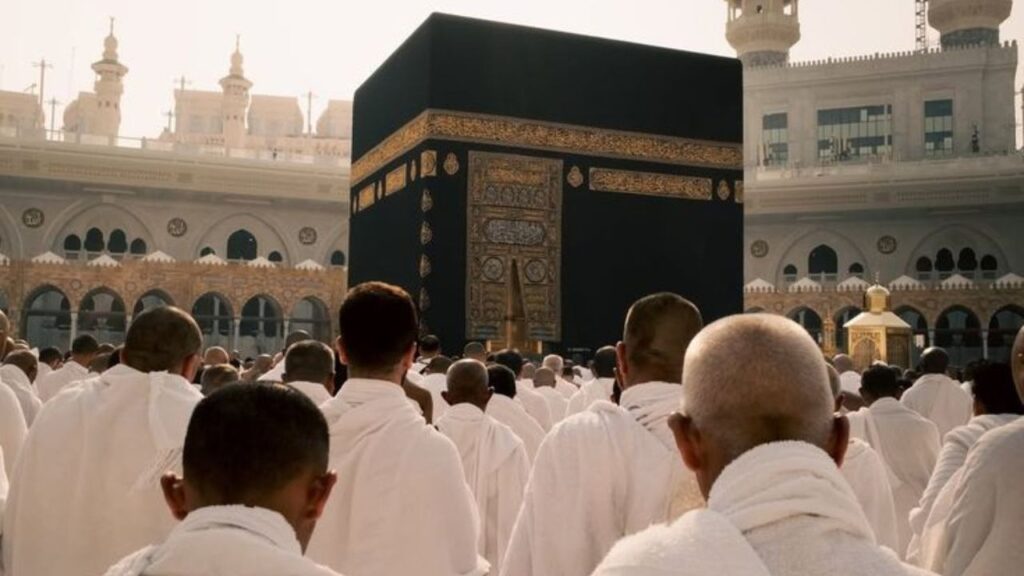
5. Perform Hajj The Pinnacle of These Sacred Days
For Muslims who possess both the physical stamina and the financial capacity, Hajj represents the single most valuable deed achievable during the first 10 days of Dhul Hijjah. It is one of Islam’s five foundational pillars, required once in every eligible Muslim’s lifetime.
The Prophet ﷺ raised its reward to the highest imaginable level when he stated in a hadith collected by Ibn Majah that an accepted pilgrimage earns nothing less than Paradise. The rituals themselves standing at Arafat, performing Tawaf around the Kaaba, completing Sa’i between Safa and Marwah physically retrace the footsteps of Prophet Ibrahim (AS) and his family, connecting every pilgrim to thousands of years of monotheistic devotion.
For those staying home this year, every other act in this guide remains fully available and richly rewarded. Allah designed these ten days as a gateway of mercy for the entire Ummah not exclusively for those at the sacred sites.
6. Wake for Night Prayer (Qiyam al-Layl)
Voluntary prayer in the final third of the night carries immense weight throughout the year, but during the sacred nights of Dhul Hijjah, its value intensifies. Sahih al-Bukhari (no. 1145) records that Allah descends to the nearest heaven during this portion of the night, inviting His servants to ask so that He may grant, and to seek forgiveness so that He may pardon.
The Tabi’ee scholar Said ibn Jubayr renowned for his deep knowledge of Quranic exegesis reportedly advised people to remain active in worship throughout the Dhul Hijjah nights, as cited by scholars including Ibn Rajab al-Hanbali in his works on seasonal worship.
Even two short units of prayer performed with concentration and sincerity before Fajr can shift your entire spiritual trajectory across these ten days.
7. Deepen Your Connection with the Quran
Reading the Quran during this period earns compounded reward. The Prophet ﷺ taught in a hadith recorded by al-Tirmidhi (no. 2910) that each letter read from Allah’s Book produces a good deed, and every good deed is multiplied tenfold. During a period where all righteous deeds are already amplified, Quran recitation becomes extraordinarily valuable.
Rather than chasing volume, focus on meaningful engagement. Set a realistic daily target a single page with its translation, a ten-minute session of reflective reading (tadabbur), or one thematic passage studied in depth. Consistency across nine or ten days matters far more than a marathon session on one.
8. Turn Back to Allah Through Sincere Repentance
The atmosphere of these ten days is saturated with divine mercy, making them an ideal moment for tawbah (repentance). Allah Himself extends the invitation in Surah Hud (11:3), promising those who seek forgiveness a generous provision and favor in return.
Combine your repentance with the other acts described above fasting, charity, dhikr, and night prayer and you create what scholars describe as a comprehensive spiritual reset, the kind that recalibrates your relationship with Allah for the entire year ahead.
Mistakes That Silently Drain Your Dhul Hijjah Reward
Awareness of common errors can protect the value of your worship:
- Treating these days no differently than any other week Research by the Yaqeen Institute emphasizes that many Muslims remain unaware these days outrank even the days of Ramadan for performing good deeds. Education is the first barrier to overcome.
- Letting the Day of Arafah pass without fasting This single voluntary fast expiates two years of sins, yet it is frequently missed because people confuse it with a Hajj-only ritual. Non-pilgrims are the primary audience for this fast.
- Abandoning vocal takbeer The open, communal recitation of takbeer was a hallmark of the companions’ practice during these days. Its widespread neglect means its revival carries double reward one for the act itself and another for restoring a forgotten Sunnah.
- Postponing Qurbani logistics until the final hours Rushed arrangements can compromise the quality and timing of the sacrifice. Planning at least two weeks ahead avoids unnecessary stress and ensures your offering meets all Islamic requirements.
- Trimming hair or nails after sighting the moon Those intending to offer Qurbani must avoid cutting hair and nails from 1 Dhul Hijjah onward, as established by the narration of Umm Salamah (RA) in Sahih Muslim (1977). The Hanbali school considers this prohibition mandatory, while the majority view it as strongly recommended.
Final Thoughts: Seize These Ten Days Before They Slip Away
The first 10 days of Dhul Hijjah arrive once every year and vanish just as quickly. Every hadith, every verse, and every scholarly commentary points toward the same conclusion this is the single most rewarding stretch of time for a Muslim to invest in their relationship with Allah.
You do not need a plane ticket to Makkah to benefit. Fast what you can, speak the takbeer wherever you are, give even a small amount in charity each day, recite even a single page of the Quran with reflection, and stand before your Lord in the quiet hours before Fajr. As the Day of Arafah approaches, dedicate yourself fully to prayer and observing the fast. When Eid al-Adha dawns, celebrate with gratitude and offer your Qurbani with a present heart.
Share this guide with your family, your neighbors, and your community. The more people who act on this knowledge, the greater the collective reward and yours grows alongside theirs. May Allah accept every effort you make during these magnificent days and bring you closer to His pleasure than ever before.
Why are the first 10 days of Dhul Hijjah the best days of the year?
Allah honors these days with a direct oath inSurah Al-Fajr (89:1–2), and the Prophet ﷺ confirmed inSahih al-Bukhari (969) that righteous deeds during this period are more beloved to Allah than at any other time. Their unique status comes from combining every category of worship prayer, fasting, charity, pilgrimage, and remembrance within a single ten-day span.
Can one observe fasting throughout all ten days of Dhul Hijjah?
Fasting is encouraged on the first nine days, particularly the 9th (Day of Arafah), which expiates two years of sins perSahih Muslim (1162). Fasting on the 10th day Eid al-Adha is strictly prohibited because it is designated as a day of feasting and joy.
What acts of worship should non-pilgrims prioritize during Dhul Hijjah?
Non-pilgrims should focus on fasting (especially on Arafah), abundant dhikr including takbeer, charitable giving, Quran recitation, night prayers, sincere repentance, and arranging their Qurbani. The Prophet ﷺ directed all believers not just Hajj pilgrims to fill these days with good deeds, as recorded inMusnad Ahmad.
When does the first 10 days of Dhul Hijjah begin in 2026?
According to theUmm al-Qura calendar and projections fromIslamic Relief UK, Dhul Hijjah 1447 AH is expected to start on Monday, May 18, 2026. The Day of Arafah would then fall on May 26 and Eid al-Adha on May 27 subject to official crescent moon confirmation.
Is offering Qurbani obligatory or voluntary?
The answer varies by scholarly school. The Hanafi madhab classifies Qurbani as obligatory (wajib) for every sane Muslim adult whose wealth exceeds the Nisab threshold, as outlined byMuslim Aid’s Qurbani guidelines. According to the Shafi’i, Maliki, and Hanbali schools, it is regarded as a highly emphasized Sunnah. Regardless of classification, scholars across all schools encourage every able Muslim to participate.
Should I stop cutting my hair and nails during the first 10 days?
If you plan to offer Qurbani, the majority of scholars recommend and the Hanbali school mandates that you refrain from trimming hair and nails from 1 Dhul Hijjah until your sacrifice is completed. This ruling is based on the hadith of Umm Salamah (RA) preserved inSahih Muslim (1977). The restriction applies specifically to the person offering the sacrifice, not to their family members, unless those family members are also giving their own Qurbani.